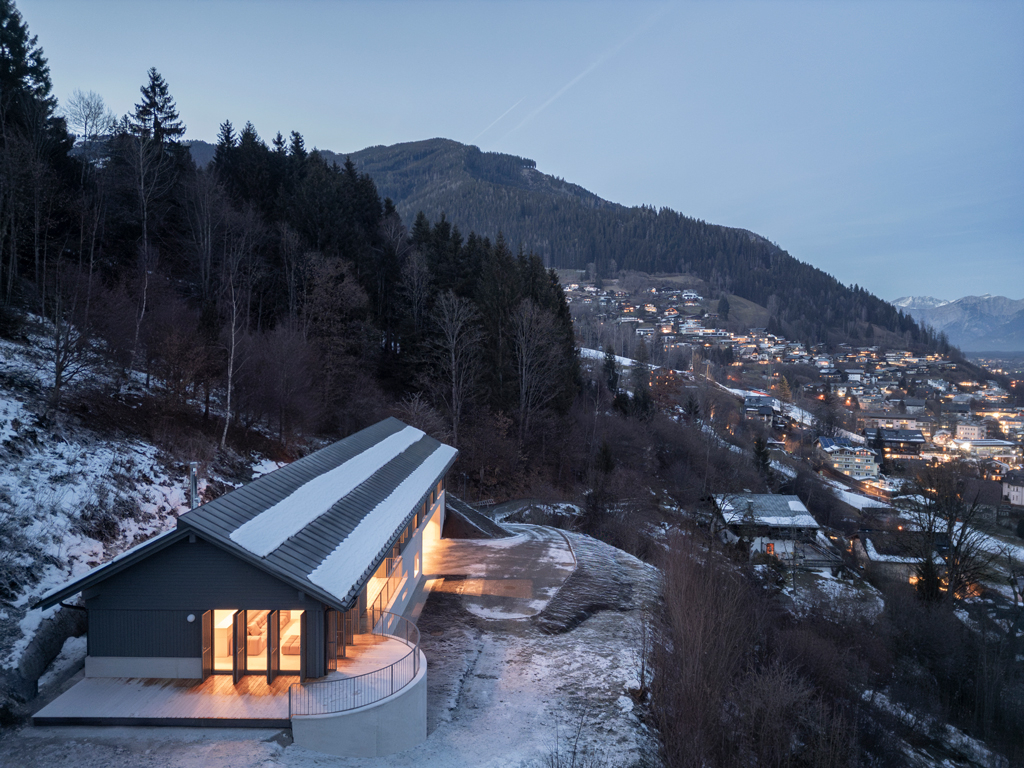
Zell am See is a quaint and drowsy ten thousand people village in the Salzburg State Alps, not far from the German border. Known for its prime skiing facilites during the winter and for the heartrending beauty of its unruffled saphire lake in the summer, Zell is a favourite spot for tourists, as well as the studio's heartland. Up on the slopes that insulate the village, with stunning views of the lake and valley, sits this family home for a physician.
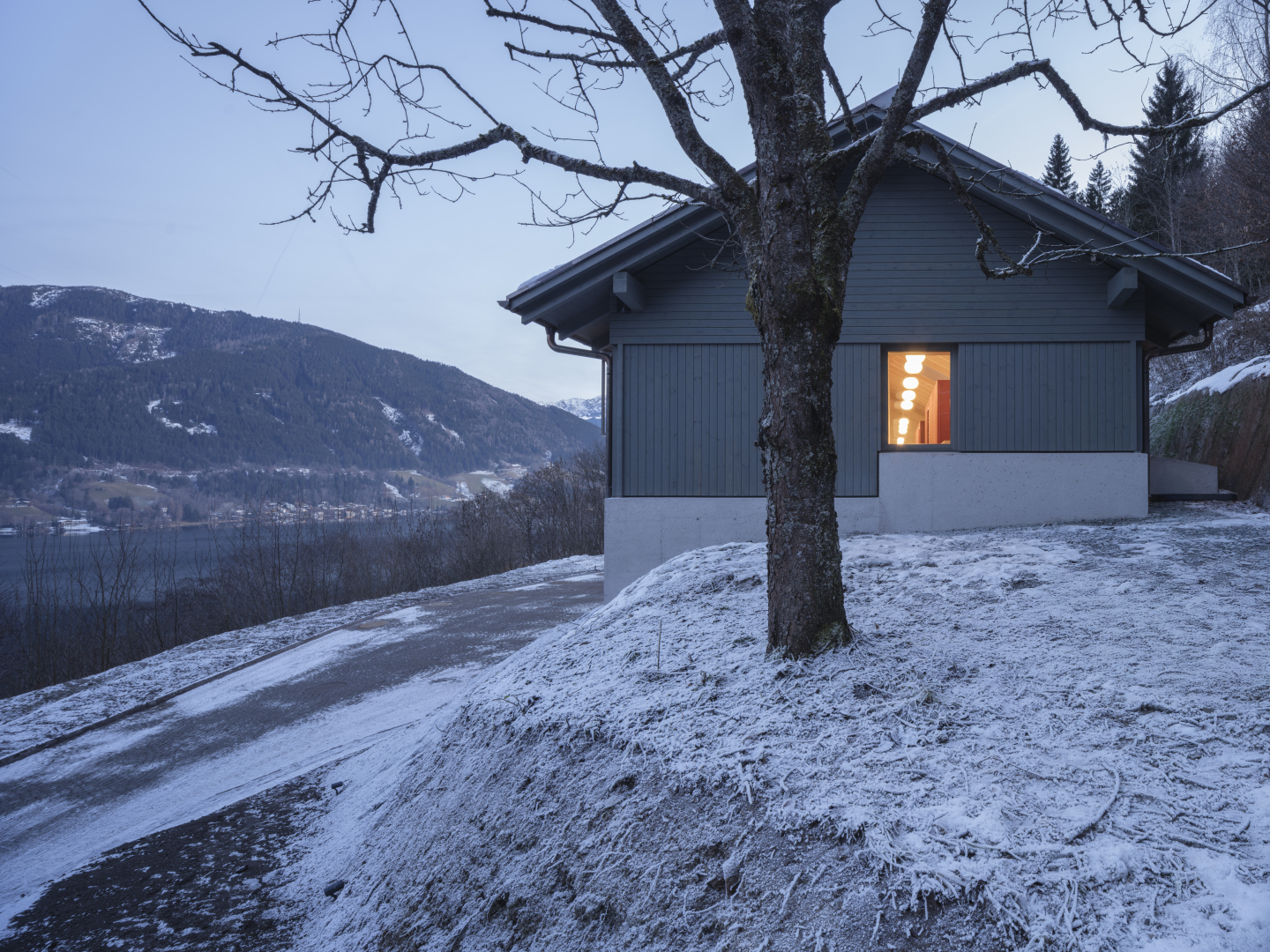
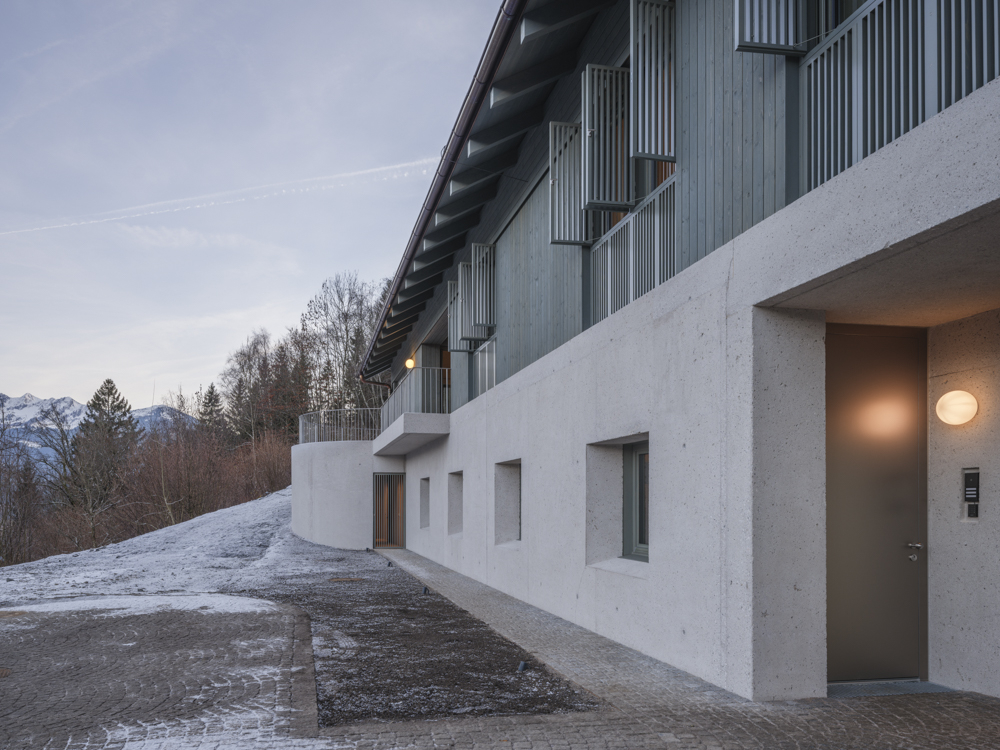
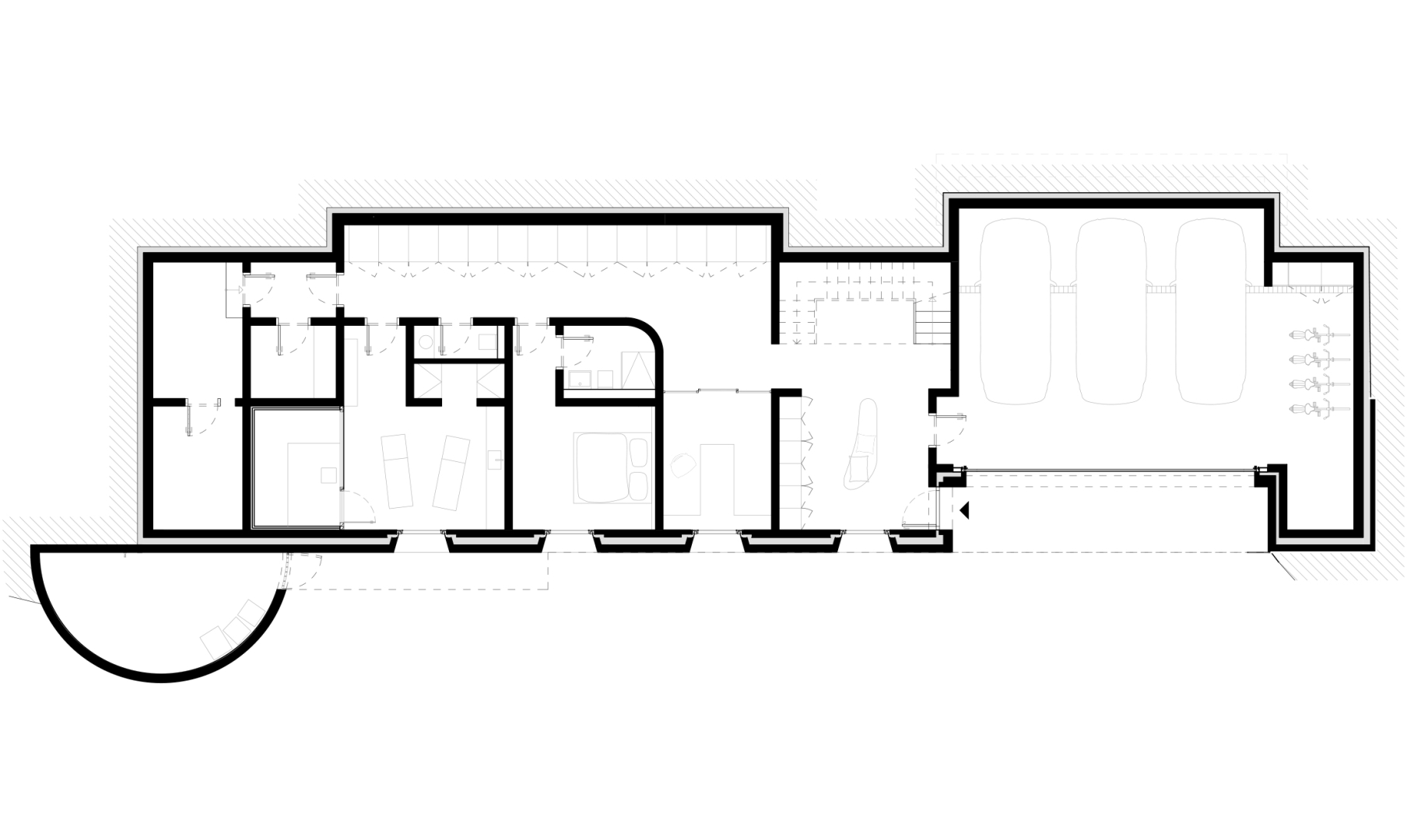
The house sticks to the ancestral construction logic of the region, with a very solid heavy base and a sprightly, light upper floor. The base, here built in high tech concrete protects the more delicate wooden upper floor from the inclement Alpine weather: the unforgiving temperature during the winter and the perennial humidity of the ground. As such, the building acquires a bit of a split personality, which is not unlike the stereotypical buildings of high modernist architects with their obsession with pilotis and floating things.
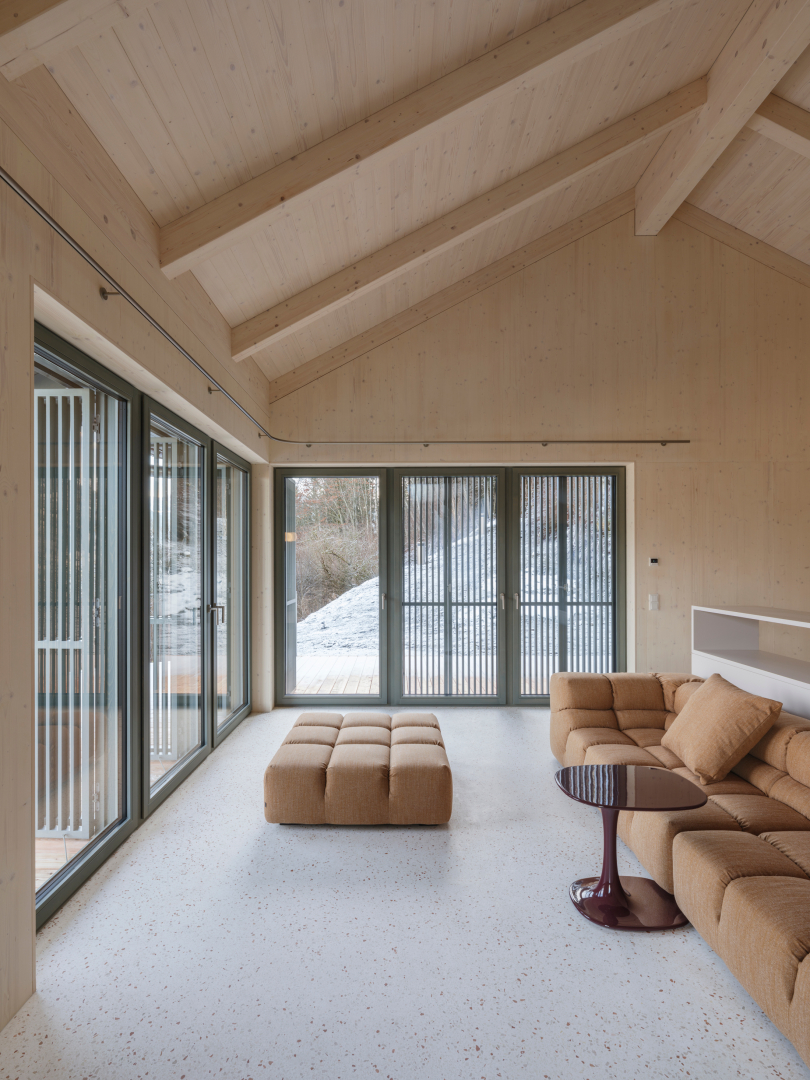
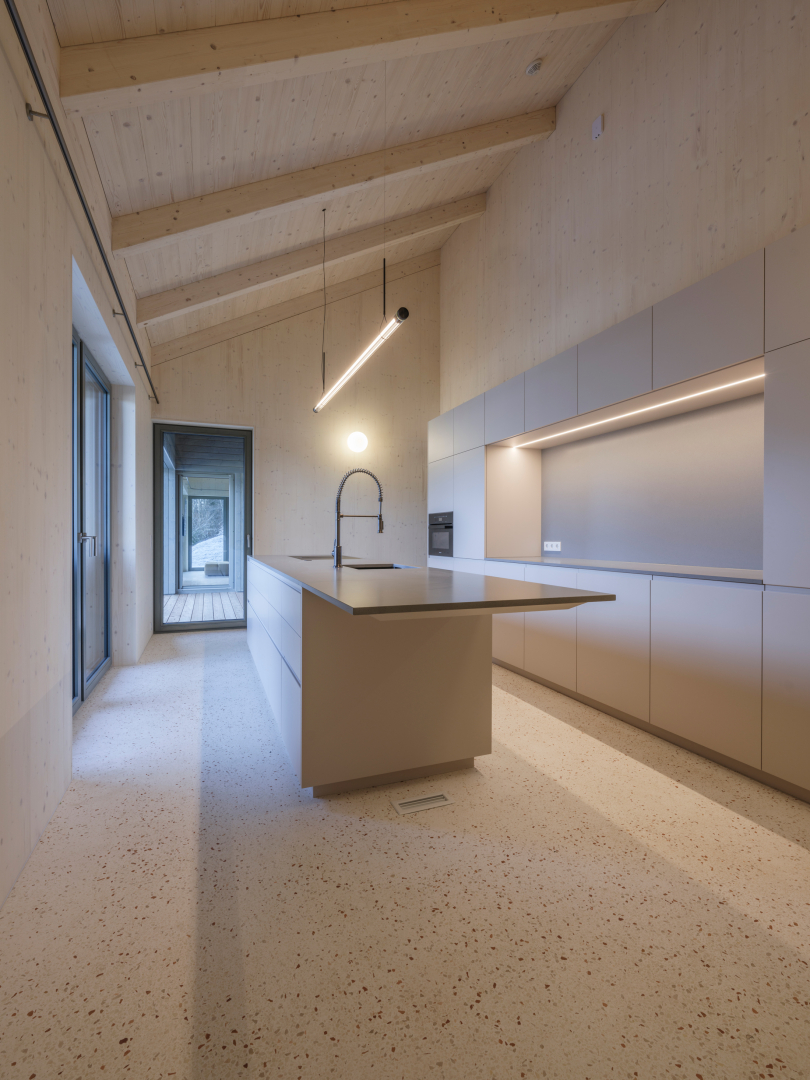
Knoxville green has been applied to the wooden boards typical of Apine architecture of the upper floor, lending this part of the house a distinct feeling that is markedly different from that of the base. But the paint has been thinned enough to let the grain of the wood show, adding yellowish tones to it. Inside, the finish of the panels is natural wood, but the green of the outside lives in the door and window frames.
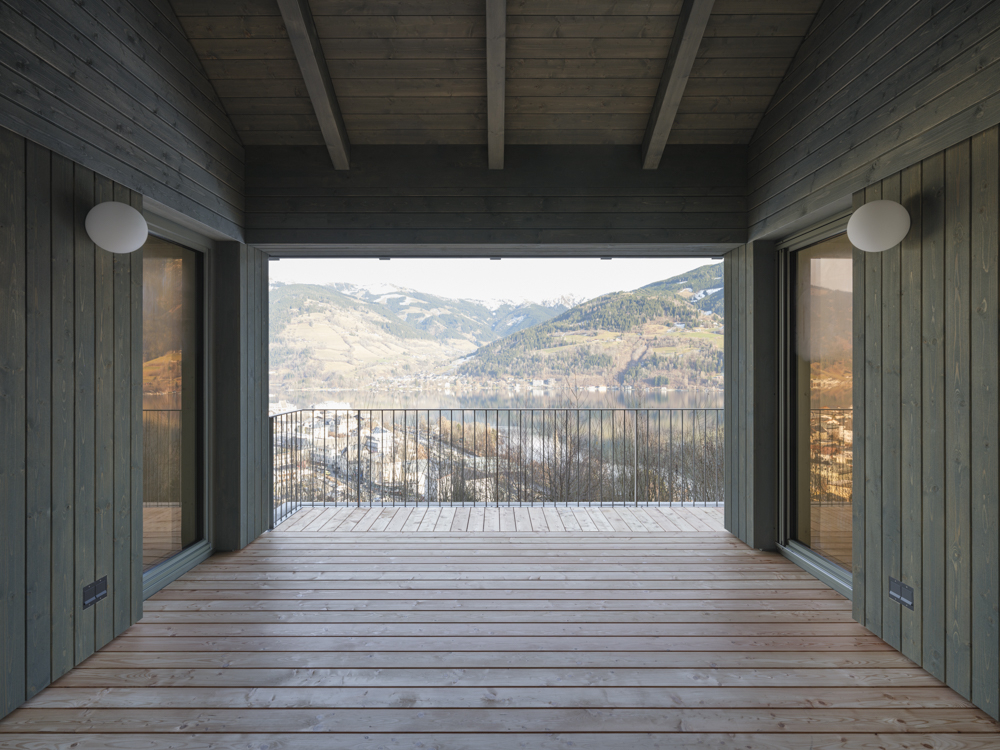
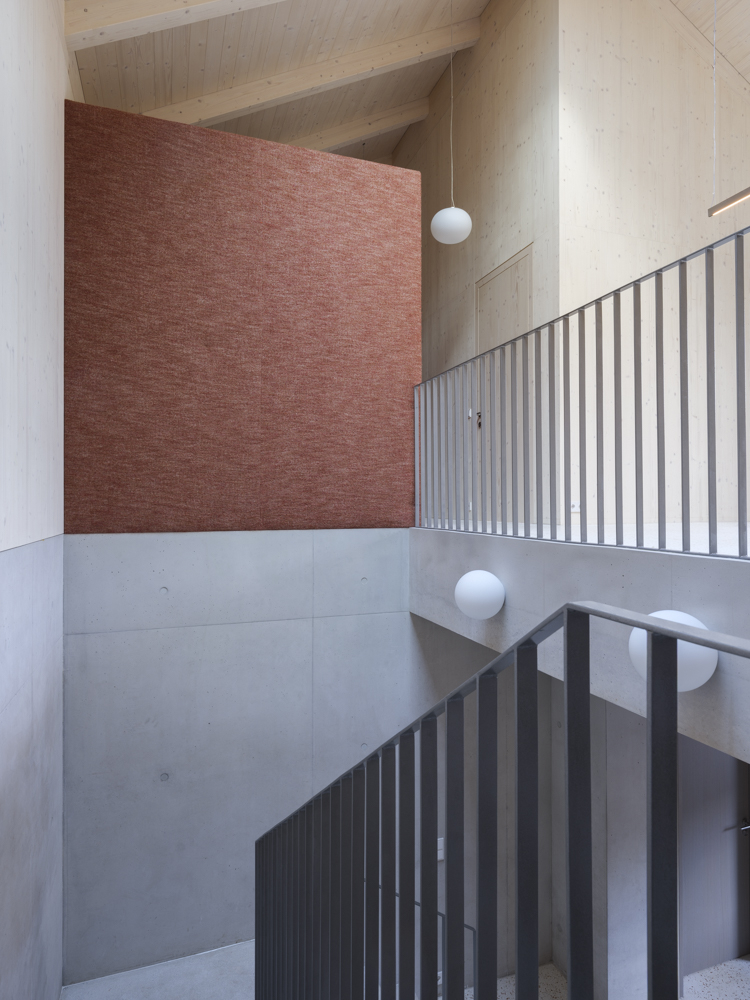
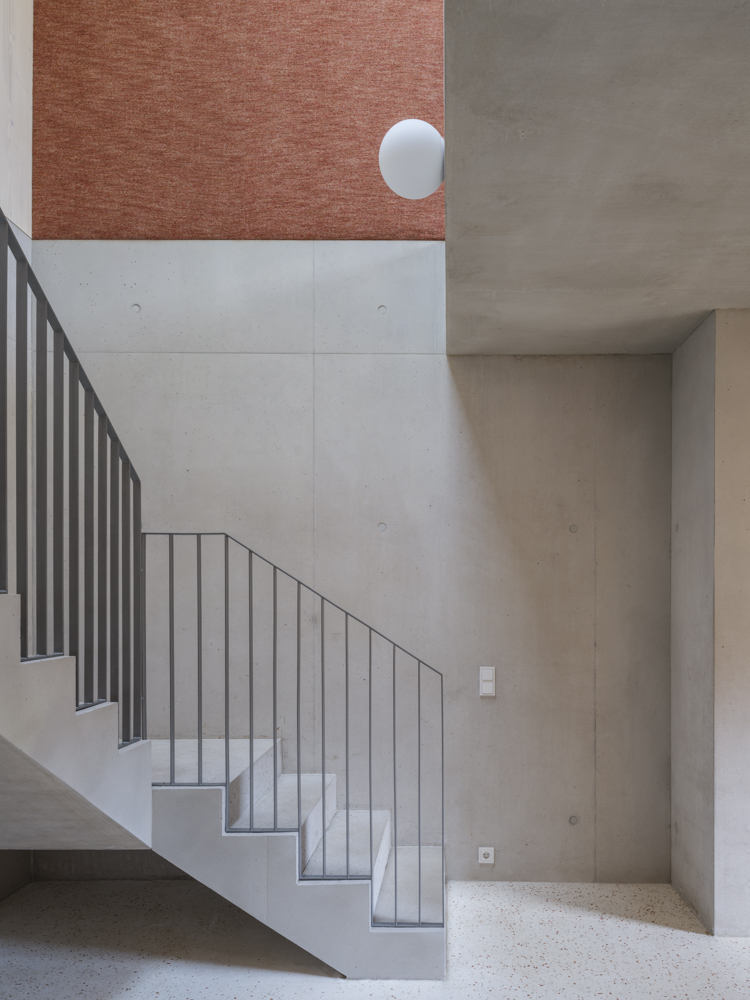
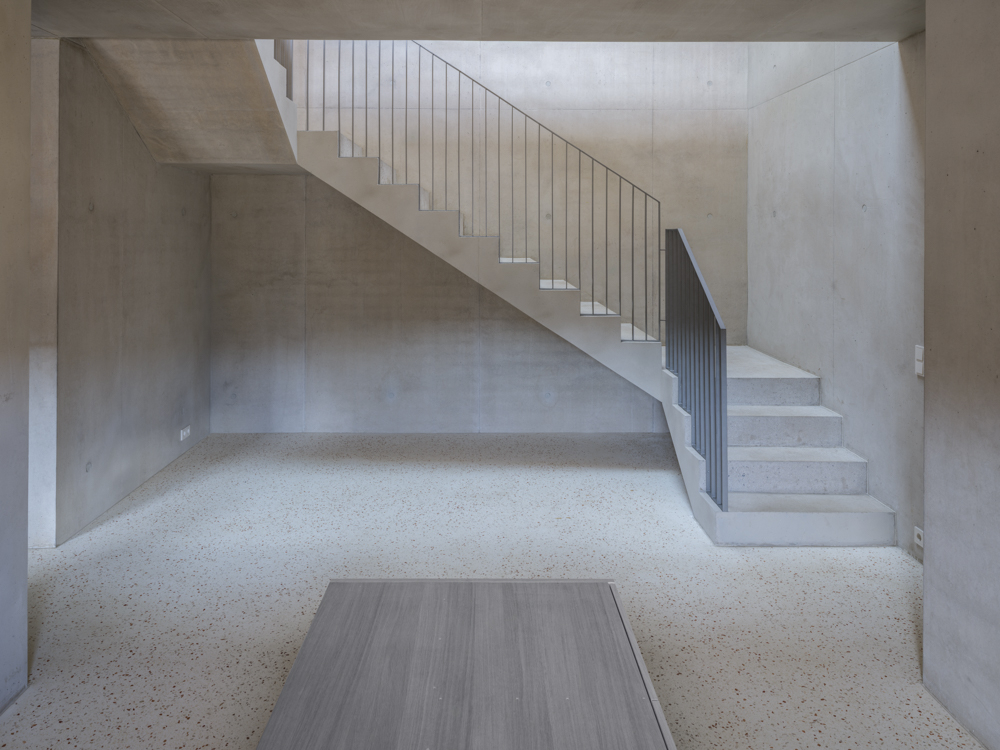
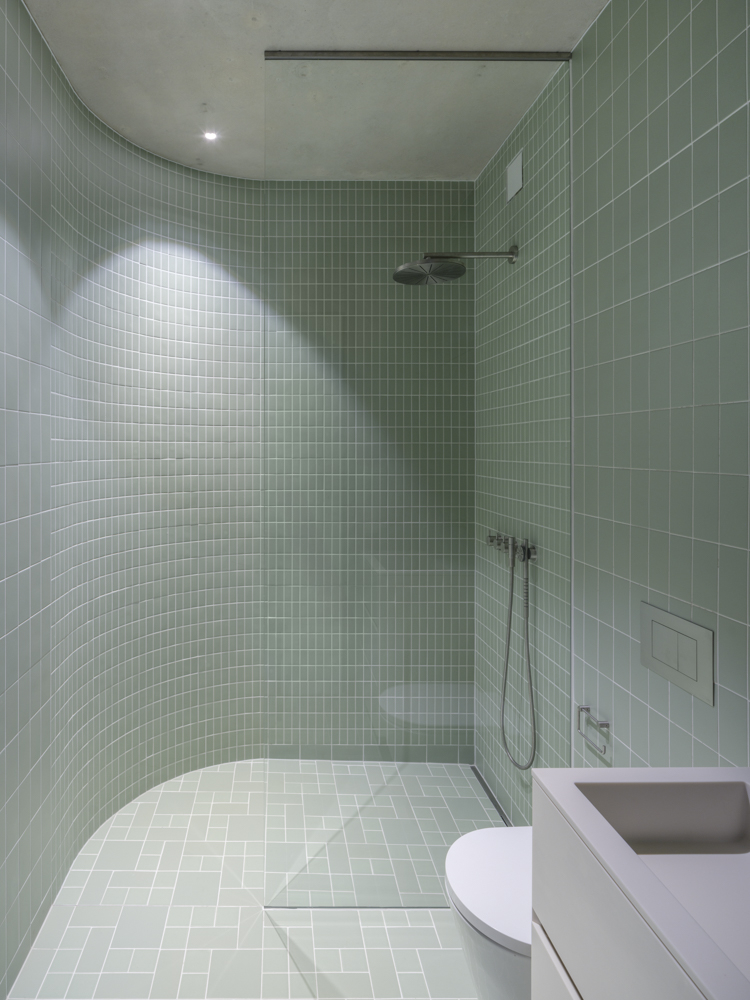
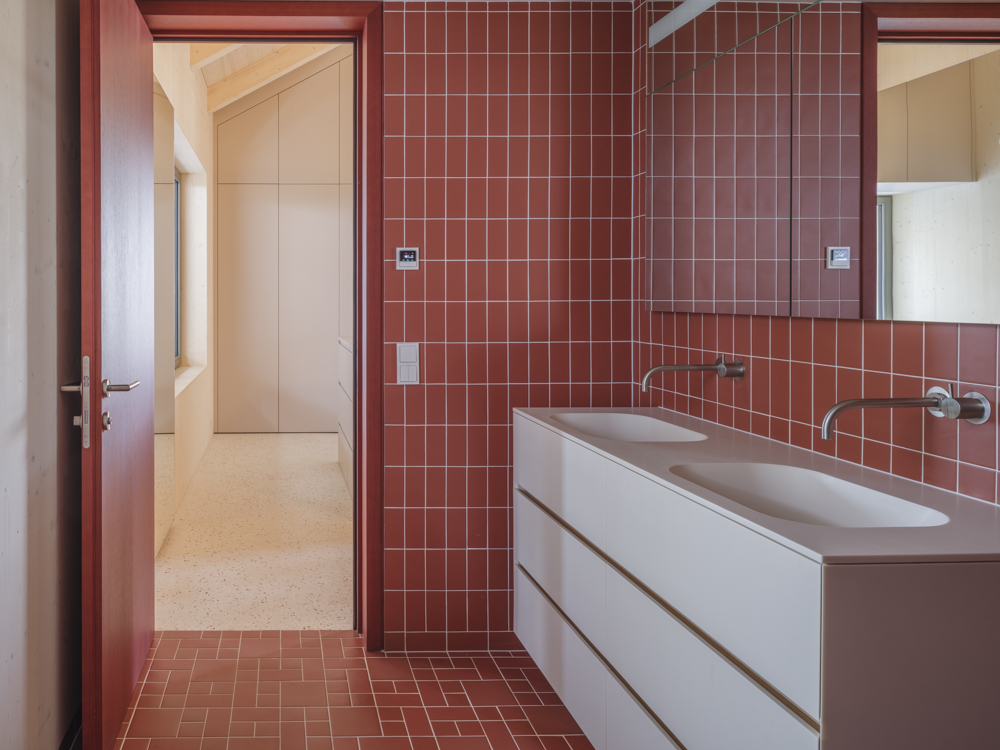
The rooms in the thick concrete base speak a decidedly different architectural language. This is the kingdom of mass and ascetism. Curt phrases. There is a sense of descent into the erstwhile cellers of the houses of the Austrian Alps and even of the Viennese buildings. Details are sharper. Curiously when colour is to be found here in the bathrooms, it is more daring here than in the first floor. The walls are thicker in the ground floor. Much thicker. So that looking through the windows onto the mountains and the lake is like looking through an old chapel window.